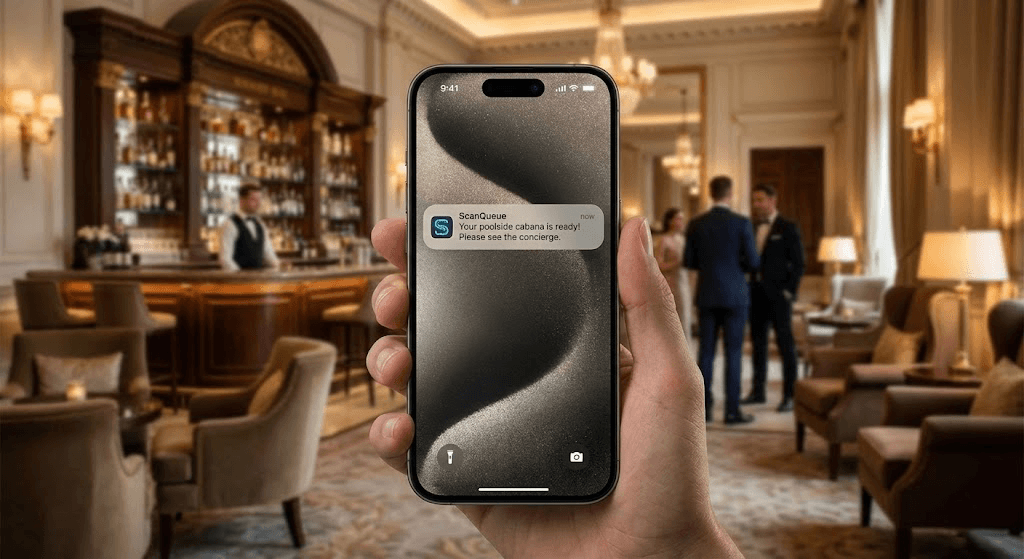
Hotel queue management is the practice of organizing and optimizing guest wait times across check-in desks, concierge services, and on-site restaurants. The direct answer: hotels that implement a digital queue system such as ScanQueue take the check-in line out of the lobby, with guests joining by QR code and getting a text when it's their turn instead of standing in line.
The challenge is real. Arrivals bunch up in the mid to late afternoon, around the standard check-in time. Add a conference group arrival or a tour bus, and you have a recipe for frustrated guests, overwhelmed staff, and negative reviews that live on TripAdvisor forever.
This guide covers the specific queue management challenges hotels face, practical solutions that work across property types, and how modern technology is transforming the lobby experience.
Why Hotel Queues Are Uniquely Challenging
Hotels aren't like other businesses when it comes to queue management. A restaurant has one queue. A barbershop has one queue. Hotels have multiple overlapping queues operating simultaneously, each with different guest expectations.
The Peak Check-In Problem
Standard check-in time across the industry is 3:00 PM. This creates a predictable but brutal demand spike. A Cornell Center for Hospitality Research study with J.D. Power, covering nearly 200,000 hotel guests, found that satisfaction among U.S. guests dropped noticeably once the check-in wait passed five minutes.
The problem compounds with group arrivals. A 200-person conference arriving simultaneously can overwhelm even well-staffed front desks. Tour groups present the same challenge — 40 guests stepping off a bus expect to get to their rooms quickly, not stand in line for 30 minutes after a long journey.
Multiple Queue Types
Hotels manage several distinct queues throughout a guest's stay:
- Check-in queue — The highest-stakes queue. Sets the tone for the entire stay
- Concierge queue — Guests seeking recommendations, bookings, or assistance
- Restaurant/breakfast queue — Peak breakfast hours (7-9 AM) create bottlenecks
- Checkout queue — Concentrated around 10-11 AM checkout times
- Valet/bell desk queue — Luggage handling and vehicle retrieval
Each of these queues has a different tolerance threshold. Guests will wait 10 minutes for a concierge recommendation. They won't wait 10 minutes for someone to bring their car around.
The Real Cost of Hotel Wait Times
Long lobby queues cost hotels in ways that go far beyond guest discomfort.
Guest Satisfaction and Reviews
Reviews have a direct financial impact. Cornell research by Chris Anderson found that a 1-point increase in a hotel's review score on a 5-point scale let it raise prices by 11.2% while keeping the same occupancy.
Staff Burnout and Turnover
Front desk staff working under constant queue pressure experience higher stress and turnover rates. Queue management directly affects staff workload — rushed transactions lead to errors, which create more work downstream.
Practical Solutions for Hotel Queue Management
1. Mobile Check-In with Virtual Queuing
The most impactful change a hotel can make is offering mobile check-in with a virtual queue. Guests scan a QR code on arrival, join the check-in queue digitally, and receive an SMS when a front desk agent is ready for them. Instead of standing in a line, they can sit in the lobby, visit the bar, or browse the gift shop.
This approach reduces perceived wait times dramatically. A digital queue system transforms dead wait time into productive or enjoyable time — a critical distinction in hospitality.
2. Staggered Group Arrivals
For conference and group bookings, implement staggered check-in windows. Instead of having 200 guests arrive at 3 PM, assign time slots (3:00, 3:30, 4:00) and communicate these in pre-arrival emails. Combine with a virtual queue so early arrivals can check in digitally and explore the property while waiting.
3. QR Code Queue for Hotel Restaurants
Hotel breakfast restaurants are notorious for morning queues. Hotels manage the breakfast rush by placing QR code stands at the restaurant entrance so guests join a virtual waitlist and receive a text when their table is ready — ScanQueue's host dashboard can also tag each guest as breakfast-included or pay-on-entry from their room number. This eliminates the awkward clustering at the host stand and lets guests finish getting ready in their room.
Pro Tip — Breakfast Queue Management: Set up separate queues for different dining areas (buffet vs. a la carte) so guests are directed to the right seating faster.
4. Concierge Virtual Queue
Rather than having guests hover near the concierge desk, let them join a virtual queue from anywhere in the hotel. This is especially valuable during peak periods (pre-dinner hours, event days) when concierge demand spikes.
5. Data-Driven Staffing
Queue management systems generate valuable data about peak times, average service durations, and wait time patterns. Use this data to staff front desks appropriately — adding agents during the 3-5 PM rush and reallocating staff during quieter periods.
Implementation: Getting Started
Implementing hotel queue management doesn't require a massive technology overhaul. Start with the highest-impact queue — typically check-in — and expand from there.
- Audit your current queues. Track wait times across all guest touchpoints for one week. Identify the worst bottlenecks.
- Start with check-in. Deploy a QR code-based virtual queue at your front desk. Measure the impact over 30 days.
- Expand to restaurants. Add virtual queuing to your breakfast restaurant and any high-demand dining outlets.
- Add concierge and services. Once staff are comfortable with the system, extend it to concierge, spa, and other guest services.
- Use data to optimize. Review queue analytics weekly to refine staffing and service processes.
Frequently Asked Questions
How much does hotel queue management software cost?
Solutions range from free tiers for small properties to $249-499/month for full-featured systems. ScanQueue starts free with paid plans from $49/month, and SMS notifications from $99/month.
Will older guests struggle with QR code check-in?
No. QR scanning is built into every modern smartphone camera. Staff should remain available for guests who prefer traditional check-in — the goal is to give guests a choice, not eliminate the front desk.
How do virtual queues work with loyalty program members who expect priority?
Most queue systems support priority tiers. VIP and loyalty members can be automatically moved ahead in the queue or assigned to dedicated agents.
Can queue management integrate with my PMS (property management system)?
Many modern queue platforms offer API access for PMS integration, allowing guest data to flow between systems and reducing duplicate data entry at check-in.
Reduce Lobby Wait Times at Your Hotel
See how ScanQueue helps hotels manage check-in queues, restaurant waitlists, and concierge services — all from one dashboard.
Explore Hotel Solutions →Last updated: February 2026
Stop losing walk-ins to wait times
Set up ScanQueue in 5 minutes. Customers scan a QR code, get SMS alerts when it's their turn, and wait anywhere.
- Free plan — no credit card
- No app download for customers
- QR code, SMS, and WhatsApp notifications
ScanQueue Team
Queue Management Experts
Helping businesses reduce wait times and improve customer experience with smart queue management solutions.