eMarketer forecast that the number of US smartphone users scanning QR codes would grow from 83.4 million in 2022 to 99.5 million in 2025. What started as an emergency measure during COVID lockdowns has become one of the most widely adopted technologies in small business history. QR codes now drive menus, payments, queue management, loyalty programs, and customer feedback across every industry.
This post examines the data behind the QR code revolution, with a specific focus on how small businesses are using QR technology in 2026 and what the adoption curves tell us about the future. If you are considering implementing QR codes for queue management, payments, or customer engagement, these statistics will help you build the business case.
The QR Code Growth Trajectory
The pandemic was the inflection point for QR codes. eMarketer counted 83.4 million US smartphone users scanning QR codes in 2022 and forecast 99.5 million by 2025.
What is changing now is the breadth of use cases. Consumers who first scanned a QR code to view a restaurant menu now scan codes to join queues, make payments, access loyalty rewards, and provide feedback.
Consumer Scanning Behavior in 2026
Understanding how consumers interact with QR codes is essential for businesses deciding where and how to deploy them.
Key consumer behavior statistics:
- 84% of consumers had scanned a QR code at least once, and 32% had scanned one in the past week (MobileIron survey of US and UK consumers, 2020)
Trust and Security Perceptions
One barrier to QR code adoption has been consumer trust. A 2020 MobileIron survey of US and UK consumers found that 64% said QR codes make life easier, but 71% could not tell a legitimate QR code from a malicious one. That is why branded, well-placed QR codes with clear context about what scanning will do matter.
How Small Businesses Use QR Codes
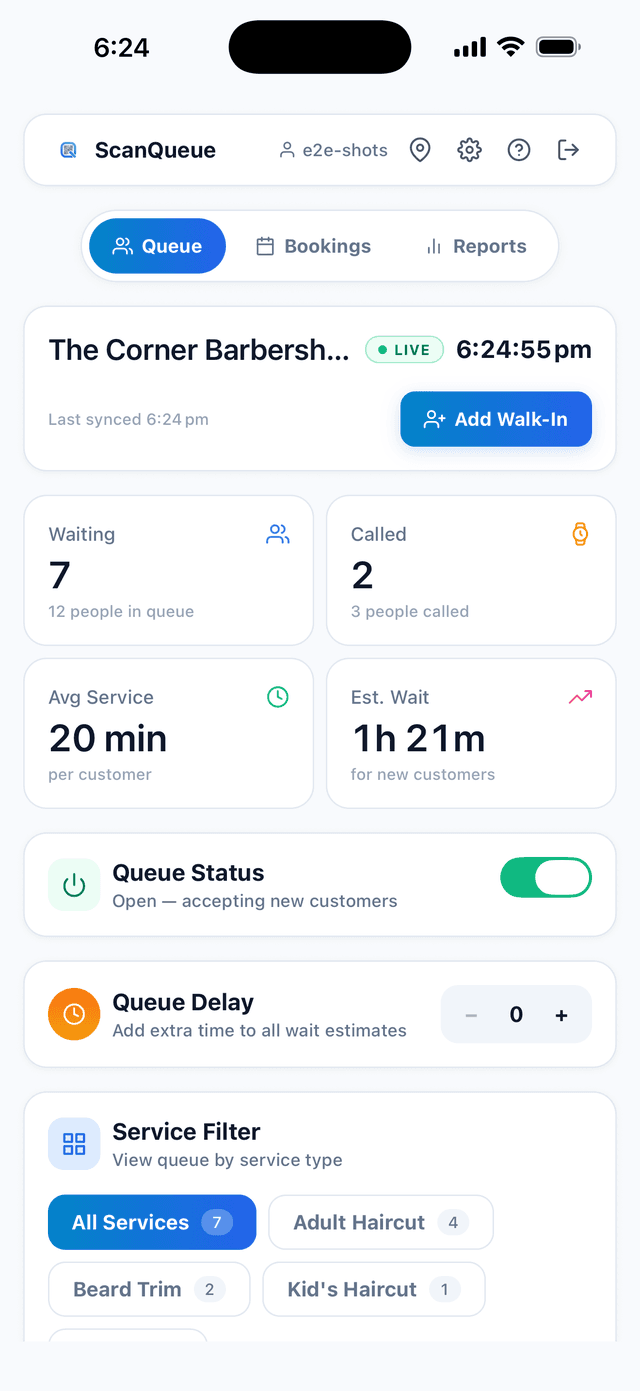
Small businesses use QR codes for menus and product information, payments, reviews, loyalty programs, social media links, and queue management or check-in. Queue management is a natural fit: a customer who scans a QR code to view a menu already knows the exact interaction needed to join a digital queue.
QR Codes for Queue Management: Why It Works
QR code queue management leverages an existing consumer behavior (scanning) for a high-value operational improvement (eliminating physical lines). This combination makes it one of the most natural technology adoptions in small business.
Why QR queue management has such strong adoption:
- Zero learning curve for customers. Customers already know how to scan QR codes. There is no app to download, no account to create, no new behavior to learn.
- Minimal cost for businesses. A printed QR code costs virtually nothing. Cloud-based queue platforms like ScanQueue offer free tiers that handle basic needs without any upfront investment.
- Immediate operational benefit. From the first customer scan, staff spend less time managing lines and more time on service delivery.
- Data capture as a side effect. Every QR scan generates data: arrival times, wait duration, service patterns, peak hours. This data is valuable for operational optimization.
Pro Tip — Maximize Your QR Code Scan Rate: Place your queue QR code at eye level near the entrance, on a table tent or A-frame sign. Include a clear call-to-action like "Scan to Join the Queue" and an estimated wait time.
What the Data Tells Us About 2026 and Beyond
The QR code story in 2026 is no longer about whether consumers will scan. That question was answered in 2021. The question now is: which businesses will deploy QR codes across the broadest range of use cases?
Three trends shaping the next phase:
- Multi-function QR codes. Businesses are consolidating multiple functions into a single scan. One QR code might join a queue, display the menu, and offer a loyalty reward. This reduces signage clutter and increases value per scan.
- Dynamic QR codes with analytics. Static QR codes that link to a fixed URL are being replaced by dynamic codes that can be updated, tracked, and A/B tested. This gives small businesses enterprise-level insights into customer behavior.
- QR-first customer journeys. Forward-thinking businesses are designing their entire customer experience around the QR scan: arrive, scan, join queue, browse, get notified, be served. The physical and digital experiences merge seamlessly.
Frequently Asked Questions
How many people use QR codes in 2026?
eMarketer forecast that 99.5 million Americans would use their smartphones to scan QR codes in 2025, up from 83.4 million in 2022.
What percentage of small businesses use QR codes?
Many small businesses use QR codes for at least one purpose, such as menus, payments, or marketing. Queue management and check-in are newer uses of the same technology.
Are QR codes still relevant after COVID?
Yes. Post-pandemic adoption has not only held but grown. The behaviors learned during COVID (contactless menus, mobile payments) have become permanent consumer preferences.
What is the best QR code use case for small business?
Menus and product information are the most familiar use case. For businesses that manage walk-in customers, QR code queue check-in is especially useful because it reduces walkouts and frees staff time.
Try QR Code Queue Management Free
ScanQueue lets customers join your queue by scanning a QR code. No app downloads, no hardware needed. Set up in 5 minutes and start eliminating lines today.
Get Your Free QR Code →Stop losing walk-ins to wait times
Set up ScanQueue in 5 minutes. Customers scan a QR code, get SMS alerts when it's their turn, and wait anywhere.
- Free plan — no credit card
- No app download for customers
- QR code, SMS, and WhatsApp notifications
ScanQueue Team
Queue Management Experts
Helping businesses reduce wait times and improve customer experience with smart queue management solutions.