You have built a great restaurant. Your food is incredible, your staff is on point, and every Saturday night at 7 PM you have a queue out the door.
There is just one problem: For every group that waits, another one walks away.
This is the "Walkaway Metric" — and it is the single biggest blind spot in the hospitality industry. Most restaurant owners obsess over table turnover and food cost percentages, but they have no idea how many potential customers they're losing before they even sit down.
Today, we are going to fix that.
The "Walkaway Metric" — What You're Not Measuring
Here is the scenario every busy restaurant knows:
A group of 4 walks in on a Saturday at 12:30 PM. Your host says, "It'll be about a 45-minute wait." They look at each other, hesitate, then mumble "We'll come back another time" — and walk out.
You never see them again.
During peak hours, some walk-in groups leave without adding their name, and some of those who do add it abandon the queue before being seated.
Pro Tip — Calculate Your Own Walkaway Rate: Station someone at the door for one peak hour. Count every group that walks in, how many add their name to the list, and how many actually get seated. The gap is your lost revenue.
Why Customers Walk Away (It's Not the Wait Time)
Most owners think: "If I could just turn tables faster, the wait times would go down, and people would stay."
But here is the real problem: Customers don't mind waiting. They mind feeling trapped.
When a customer puts their name on a paper list, they have to:
- Stand near the host stand — They're afraid to move in case they miss their name being called.
- Stare at the chaos — A packed entry creates anxiety. "Is that group ahead of me? Did they just seat someone who arrived later?"
- Babysit their phone — If you call and they don't answer, they lose their spot.
This is the "waitlist trap" — and it's actively pushing your customers out the door.
The "Bar Tab Strategy" — Turn Wait Time Into Revenue
Here is a trick from some of the best restaurants in the country: They monetise their waitlist.
When a guest joins the queue, instead of standing at the host stand, they're directed to the bar. They open a tab, order a drink or two, and relax.
When their table is ready, a text or WhatsApp message tells them exactly when to walk over. No shouting of names. Just a calm, professional experience.
The "Freedom to Roam" Principle
Here is the psychology behind why this works.
When a customer is told "You'll wait 40 minutes, and you have to stay near the door," their brain starts a countdown clock. Every minute feels like 5. They get irritated, and they start calculating whether they should leave.
But when a customer is told "You'll wait 40 minutes. Go explore the shops next door, grab a coffee, or sit at our bar — we'll call you when your table is ready," something changes.
The wait time doesn't change. But the experience of waiting is completely different.
This is called "perceived wait time," and it's one of the most powerful levers in customer experience.
How to Implement This in Your Restaurant
You don't need a massive tech overhaul to start capturing these lost customers.
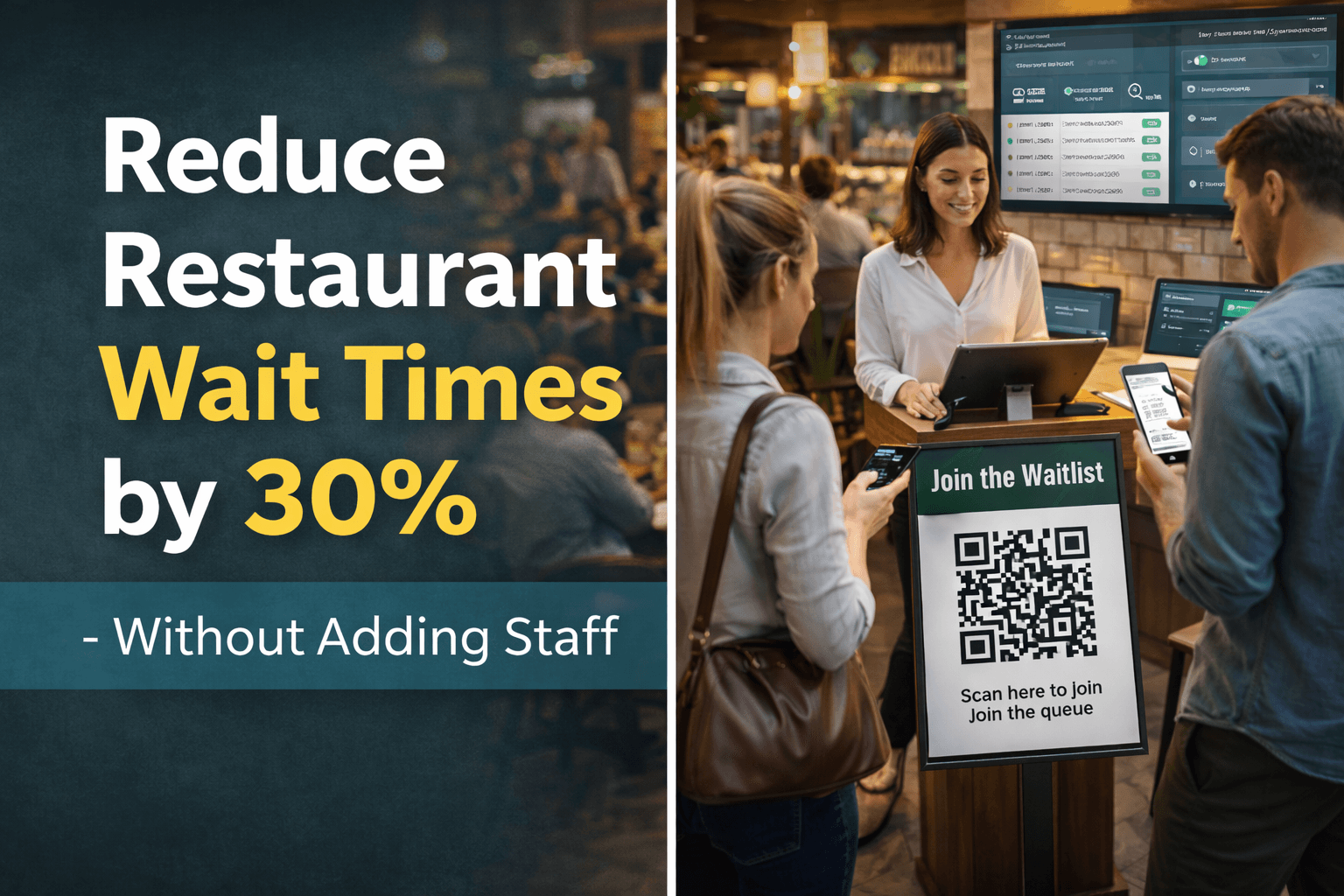
- Get a digital queue: Replace your clipboard with a QR code. Customers scan, add their name, and get live position updates.
- Message them when the table is ready: A text or WhatsApp alert reaches them at the bar or down the street.
- Train your staff: When a guest joins the queue, say "You have about 30 minutes. Feel free to grab a drink at the bar or explore the area — we'll call you."
The Bottom Line
Every customer who walks away because "it looked too busy" is a missed opportunity. Every group that abandons the queue is a table that went empty.
The solution is not to turn tables faster. It is to make waiting feel like something other than waiting.
Give your customers freedom, keep them informed, and turn your waitlist into a revenue engine — not a wall that keeps people out.
See How ScanQueue Works for Restaurants
Discover how restaurants are using ScanQueue to manage walk-ins, boost revenue, and transform wait times into bar sales.
View Restaurant Solutions →Run a restaurant or cafe? See our restaurant waitlist app.
Stop losing walk-ins to wait times
Set up ScanQueue in 5 minutes. Customers scan a QR code, get SMS alerts when it's their turn, and wait anywhere.
- Free plan, no credit card
- No app download for customers
- QR code, SMS, and WhatsApp notifications
Fernando Mendes
Founder, ScanQueue
Helping businesses reduce wait times and improve customer experience with smart queue management solutions.