Retail queue management directly impacts your bottom line. The short answer: UK shoppers will queue for just under six minutes on average before abandoning their basket, according to an Omnico study. Every customer who walks out takes their spend with them, and across a busy Saturday that adds up.
But queue management in retail isn't just about checkout lines anymore. Modern retail creates wait points at service counters, fitting rooms, click-and-collect desks, returns counters, and specialist consultations. Each one is an opportunity to either build customer loyalty or lose a sale.
This guide covers practical, data-backed strategies for managing every type of retail queue — with a focus on solutions that deliver measurable ROI.
The True Cost of Retail Queues
Let's start with the data that should keep every retail manager awake at night.
Research from payments company Adyen estimated that long lines cost US retailers about $37.7 billion in potential sales over a year, with 86% of US consumers saying they had left a store because of a long line. A separate survey of 2,000 UK shoppers for Box Technologies and Intel found that 86% avoid a store if its queues are too long.
The implication is clear: you don't need to eliminate waits entirely. You need to keep them short, or make them feel shorter than they are.
Types of Retail Queues (and How to Manage Each)
Service Counter Queues
Electronics departments, jewellery counters, pharmacy pickups, deli counters — any area where customers need staff assistance creates a queue. These are high-value interactions, and losing a customer here means losing someone who was ready to spend.
Solution: Place a QR code at the service counter. Customers scan, join the virtual queue, and continue shopping. When it's their turn, they receive an SMS notification. This converts dead wait time into additional browsing time — and browsing time drives impulse purchases.
Pro Tip — Impulse Revenue: Customers who browse while waiting can add items to their basket they wouldn't have otherwise considered.
Fitting Room Queues
Fitting rooms create a particularly painful queue because customers are holding armfuls of clothing they haven't yet committed to buying. Every minute they wait increases the chance they'll put items back on the rack and leave.
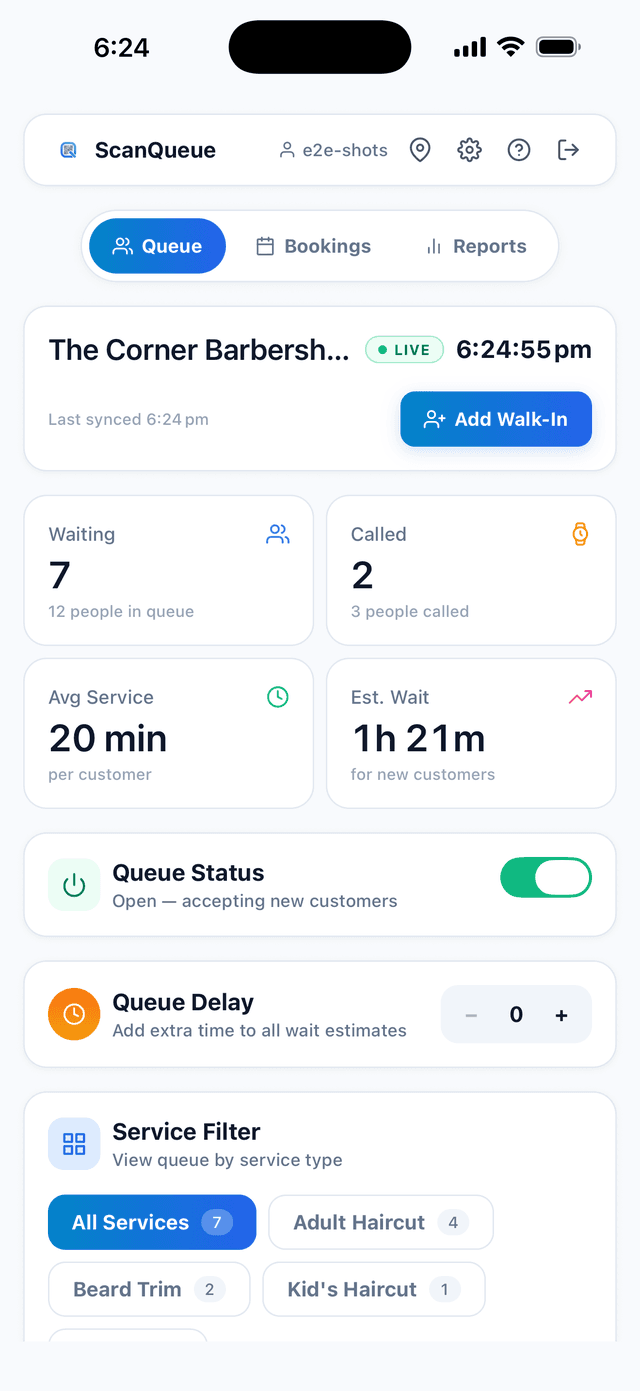
Solution: Virtual fitting room queues. Customers scan a QR code near the fitting rooms, get a position in the queue, and continue browsing. An SMS alerts them when a room is available. Staff can manage the queue from a tablet, seeing how many people are waiting and average wait times.
Click-and-Collect / BOPIS
Buy Online, Pick Up In Store (BOPIS) is now a popular way to shop. But the promise of BOPIS is convenience. If customers arrive and face a 15-minute wait at the collection desk, the entire value proposition collapses.
Solution: When a BOPIS customer arrives, they scan a QR code or check in via a link sent with their order confirmation. Staff are notified and can have the order ready by the time the customer reaches the desk. For peak periods, time-slot scheduling prevents collection desk congestion.
Returns and Exchanges
Returns desks are the most emotionally charged queue in retail. Customers already have a grievance (the product didn't meet expectations), and making them wait compounds that frustration.
Solution: A dedicated virtual queue for returns, separate from general service. This sets clear expectations about wait times and prevents returns customers from feeling deprioritized when service desk staff help other customers first.
The ROI of Retail Queue Management
Queue management isn't a cost center — it's a revenue driver. Here's how to calculate the return:
Revenue Recovery
If your store loses 20 customers per week to queue abandonment, and each represents $32 in lost revenue:
- Weekly lost revenue: $640
- Monthly lost revenue: $2,560
- Annual lost revenue: $30,720
A queue management system that recovers even 50% of these walk-aways pays for itself many times over.
Increased Basket Size
Virtual queues turn waiting customers into browsing customers.
Operational Efficiency
Queue analytics reveal staffing patterns you can't see otherwise. Which service counter needs an extra person on Saturday mornings? When does fitting room demand peak? This data drives smarter labor allocation without increasing total headcount.
Implementation Guide
- Identify your worst queue. Track walk-aways at each service point for one week. Start with the queue that loses the most customers.
- Deploy a virtual queue. Place a QR code stand at the identified queue point. Connect it to a queue management dashboard.
- Train staff. Show staff how to manage the queue from their device — serving the next customer takes one tap.
- Measure for 30 days. Compare walk-away rates, average wait times, and transaction values before and after implementation.
- Expand to other queues. Roll out to fitting rooms, returns, and click-and-collect based on the data.
Frequently Asked Questions
How does a virtual queue work in a retail store?
Customers scan a QR code at the service point, enter their name, and receive a queue position on their phone. When it's their turn, they get an SMS notification. The entire process takes under 10 seconds.
Won't customers forget they're in a queue and leave the store?
SMS notifications bring them back.
Can I use the same system for multiple service points?
Yes. Most queue management platforms support multiple queues within one location. Each service point (deli, fitting rooms, returns) gets its own queue and QR code.
What's the ROI timeline?
It depends on how many customers you currently lose to walk-aways. Measure walk-away rates and transaction values for 30 days before and after, as in the implementation steps above.
Related: Comparing tools? See the best virtual queue systems for small retail stores.
Stop Losing Sales to Long Queues
ScanQueue helps retailers manage service counters, fitting rooms, and collection desks with QR code virtual queues and SMS notifications.
Explore Retail Solutions →Last updated: January 2026
Stop losing walk-ins to wait times
Set up ScanQueue in 5 minutes. Customers scan a QR code, get SMS alerts when it's their turn, and wait anywhere.
- Free plan — no credit card
- No app download for customers
- QR code, SMS, and WhatsApp notifications
ScanQueue Team
Queue Management Experts
Helping businesses reduce wait times and improve customer experience with smart queue management solutions.