Long lines cost businesses sales. In a 2018 survey run by 451 Research for Adyen, US retailers were estimated to have lost $37.7 billion in potential sales over 12 months because shoppers left long lines. Mobile technology and real-time updates have also changed what customers expect from a wait.
This report brings together published survey data on customer waiting and indicative planning figures. Whether you run a restaurant, clinic, retail store, or service business, understanding these numbers is essential for making informed decisions about your queue management strategy.
Average Wait Times by Industry
Wait times vary significantly across sectors. The ranges below are indicative planning estimates, not results from a single published study:
| Industry | Average Wait | Abandonment Threshold |
|---|---|---|
| Restaurants (walk-in) | 15-25 min | 30 min |
| Healthcare clinics | 18-24 min | 20 min (past appt time) |
| Retail stores | 8-12 min | 10 min |
| Barbers & salons | 10-20 min | 25 min |
| Government services | 30-45 min | 60 min |
| Fast food / QSR | 3-5 min | 8 min |
The gap between average wait and abandonment threshold reveals an important pattern: most industries operate dangerously close to their customers' breaking point. Restaurants have the most buffer (5-10 minutes), while retail has almost none.
Customer Tolerance: The Psychology of Waiting
Raw wait time tells only part of the story. Research consistently shows that perceived wait time matters more than actual wait time.
Key tolerance statistics:
- 73% of consumers say valuing their time is the most important thing a company can do to provide good service (Forrester)
- 86% of US consumers say they have left a store because of long lines in the past 12 months (Adyen survey by 451 Research, 2018)
- 59% of consumers feel waiting in line is a waste of their time (Waitwhile, 2024)
The Revenue Impact of Waiting
Customer waiting is not just an experience problem. It is a revenue problem. Every minute a customer waits beyond their tolerance threshold costs your business money in direct and indirect ways.
For a mid-sized restaurant serving 200 walk-in customers per week, even a 10% walkout rate translates to 20 lost covers. At an average spend of $45 per head, that is $900 in lost weekly revenue, or $46,800 annually.
Technology Adoption in Queue Management
Digital queue management has moved from early-adopter novelty to mainstream expectation.
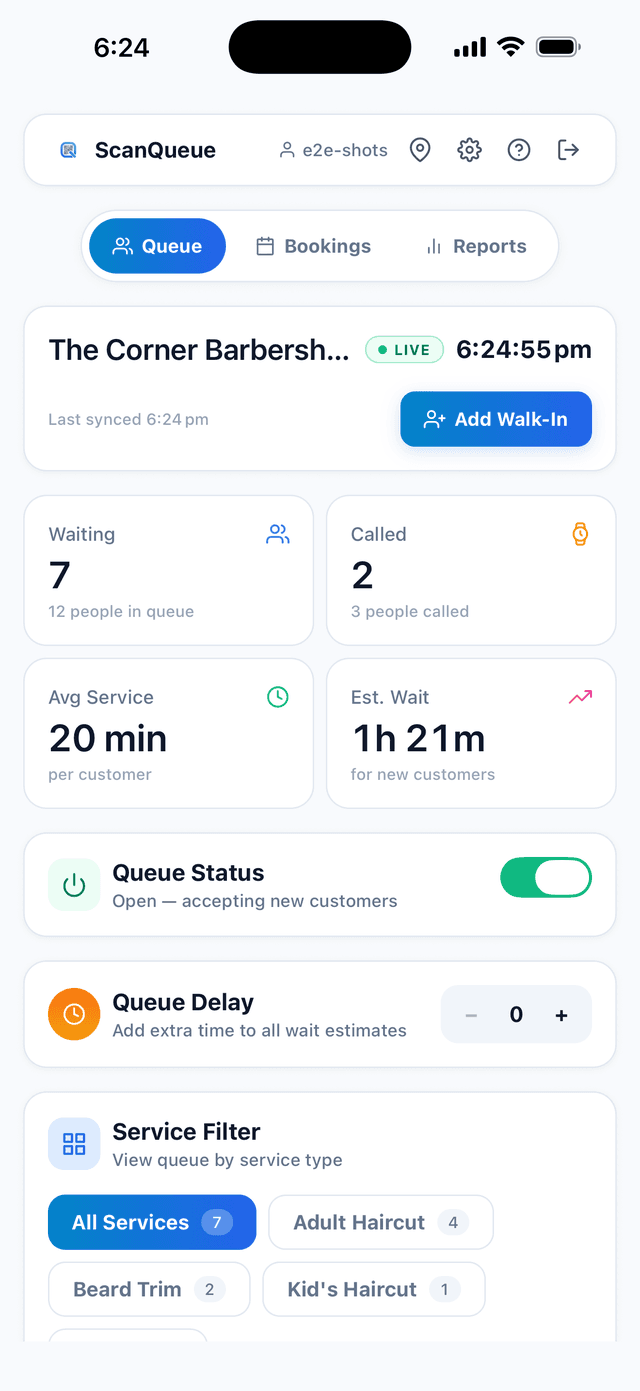
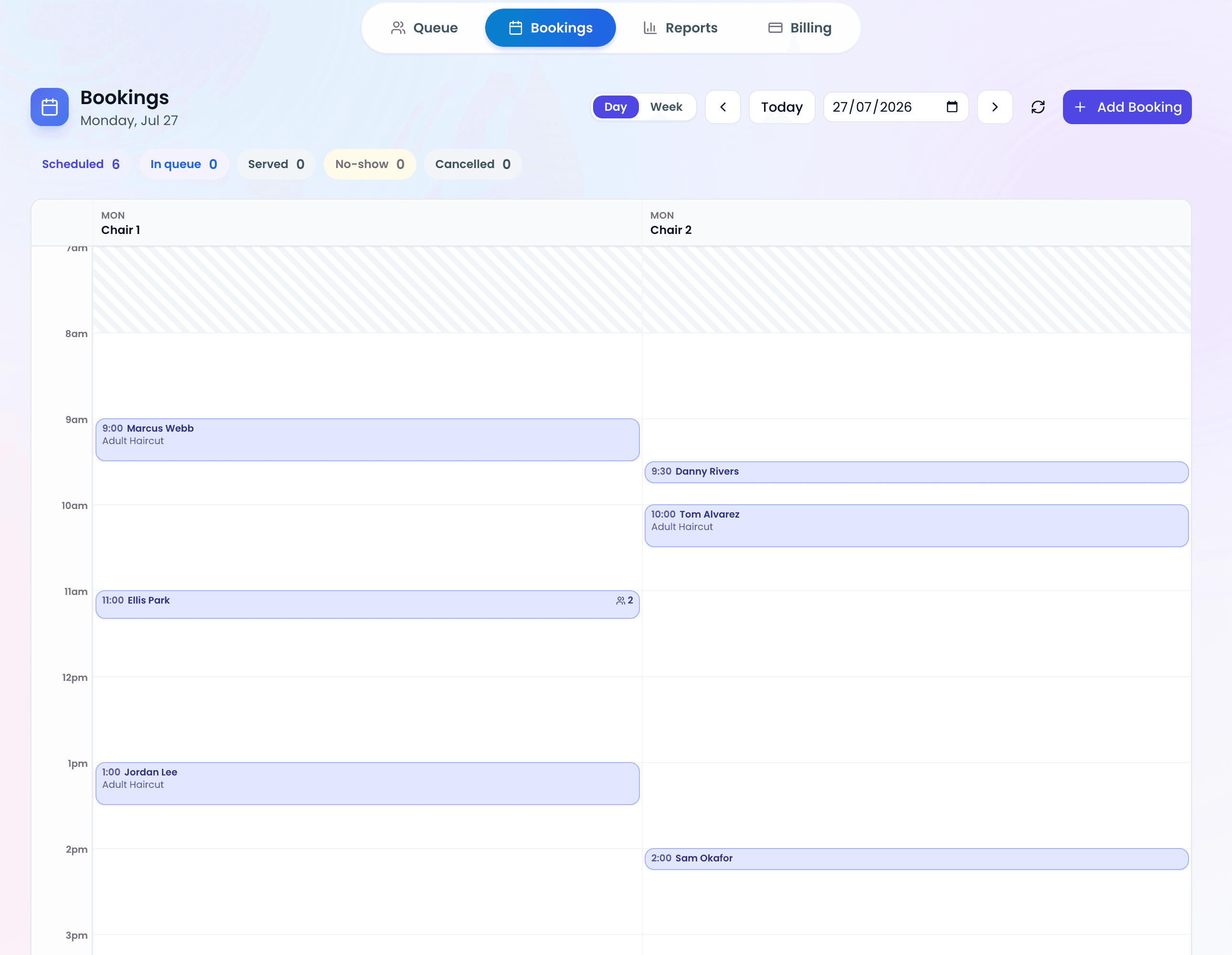
Affordable, cloud-based solutions like ScanQueue, which need no hardware and offer free tiers for low-volume operations, have put digital queues within reach of small businesses.
Customer Preference for Virtual Queues
In Waitwhile's 2024 consumer survey, 52% of respondents said they prefer virtual queues to physical lines.
The Transparency Effect: Real-Time Updates Change Everything
The single most impactful technology feature in queue management is not faster service. It is transparency. When customers know their position, estimated wait time, and receive proactive updates, their entire experience changes.
For hospitality and retail precincts there is a second benefit. In Waitwhile's 2024 consumer survey, 41% of respondents said they keep shopping while they wait in a virtual queue. A customer who joins a QR code queue at your restaurant and browses a nearby shop for 15 minutes is a happier customer than one standing at your door watching the clock.
What the Data Tells Us: Key Takeaways for 2026
The statistics paint a clear picture of where customer waiting is headed. Here are the actionable takeaways for business owners:
- Transparency trumps speed. You do not always need to reduce wait times. You need to communicate them.
- Mobile-first is non-negotiable. With 52% of consumers preferring virtual queues to physical lines (Waitwhile, 2024), paper lists and buzzer systems are becoming competitive liabilities.
- The cost of inaction is measurable. Lost walkouts, negative reviews, and reduced repeat visits create a compounding revenue problem that grows over time.
Pro Tip — Start Measuring Before Optimizing: Before investing in queue technology, spend two weeks tracking your actual wait times, walkout rates, and peak periods. These baseline metrics will help you measure the ROI of any system you implement and identify your biggest pain points.
Frequently Asked Questions
What is the average customer wait time in 2026?
It depends on the industry. As indicative planning ranges, restaurant walk-ins often wait 15-25 minutes, retail checkout 8-12 minutes, and healthcare clinics 18-24 minutes.
How long will customers wait before leaving?
There is no single threshold. In Waitwhile's 2024 consumer survey, 80% of respondents said they will tolerate up to 15 minutes in a physical line, and 61% said they had abandoned a line before their turn.
Does queue management technology actually reduce wait times?
It can. Better flow management can shorten actual waits, and real-time position updates make the remaining wait feel shorter because customers are not left guessing.
How much revenue do businesses lose from long wait times?
It varies by business. In the worked example above, a restaurant losing 20 covers a week at $45 a head gives up $46,800 a year. Across US retail, a 2018 Adyen survey run by 451 Research estimated $37.7 billion in potential sales was lost over 12 months to shoppers who left long lines.
Stop Losing Customers to Long Waits
ScanQueue gives your customers real-time position updates, SMS notifications, and QR code check-in — reducing walkouts and boosting satisfaction from day one. See pricing.
Start Free with ScanQueue →Stop losing walk-ins to wait times
Set up ScanQueue in 5 minutes. Customers scan a QR code, get SMS alerts when it's their turn, and wait anywhere.
- Free plan — no credit card
- No app download for customers
- QR code, SMS, and WhatsApp notifications
ScanQueue Team
Queue Management Experts
Helping businesses reduce wait times and improve customer experience with smart queue management solutions.