Most "customer waiting" research is survey data. People asked in a lab how long they'd wait before leaving. It's useful, but it's not what actually happens.
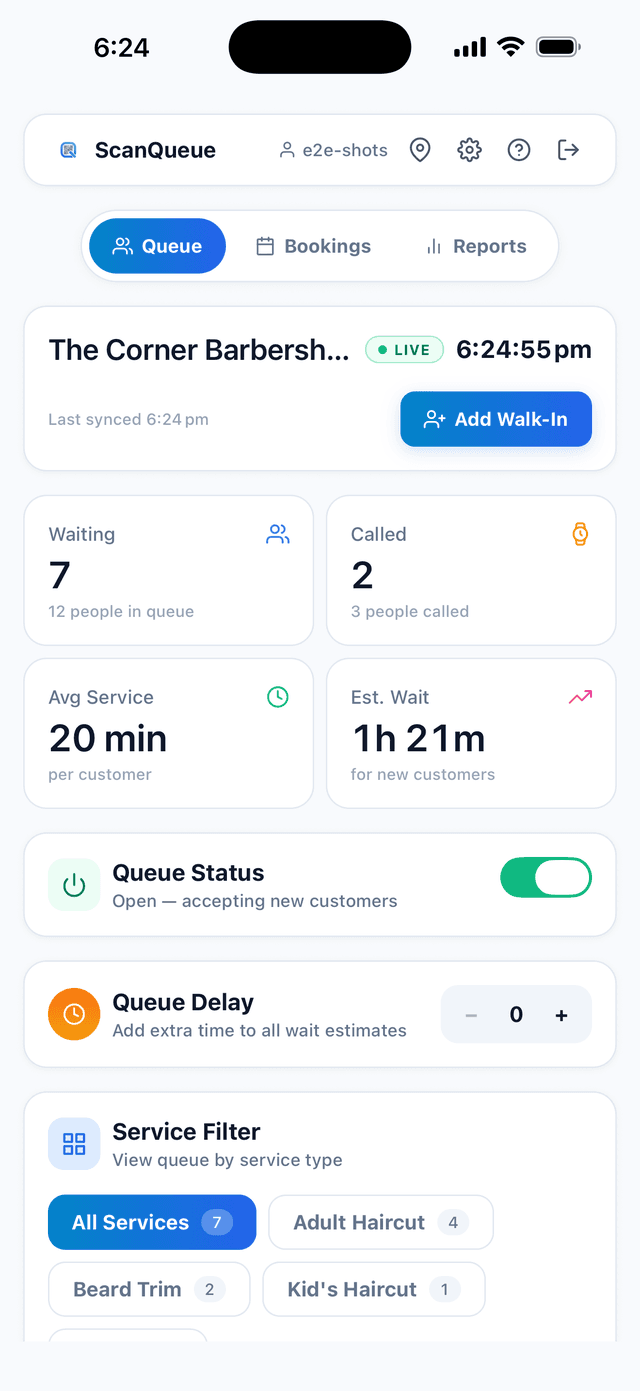
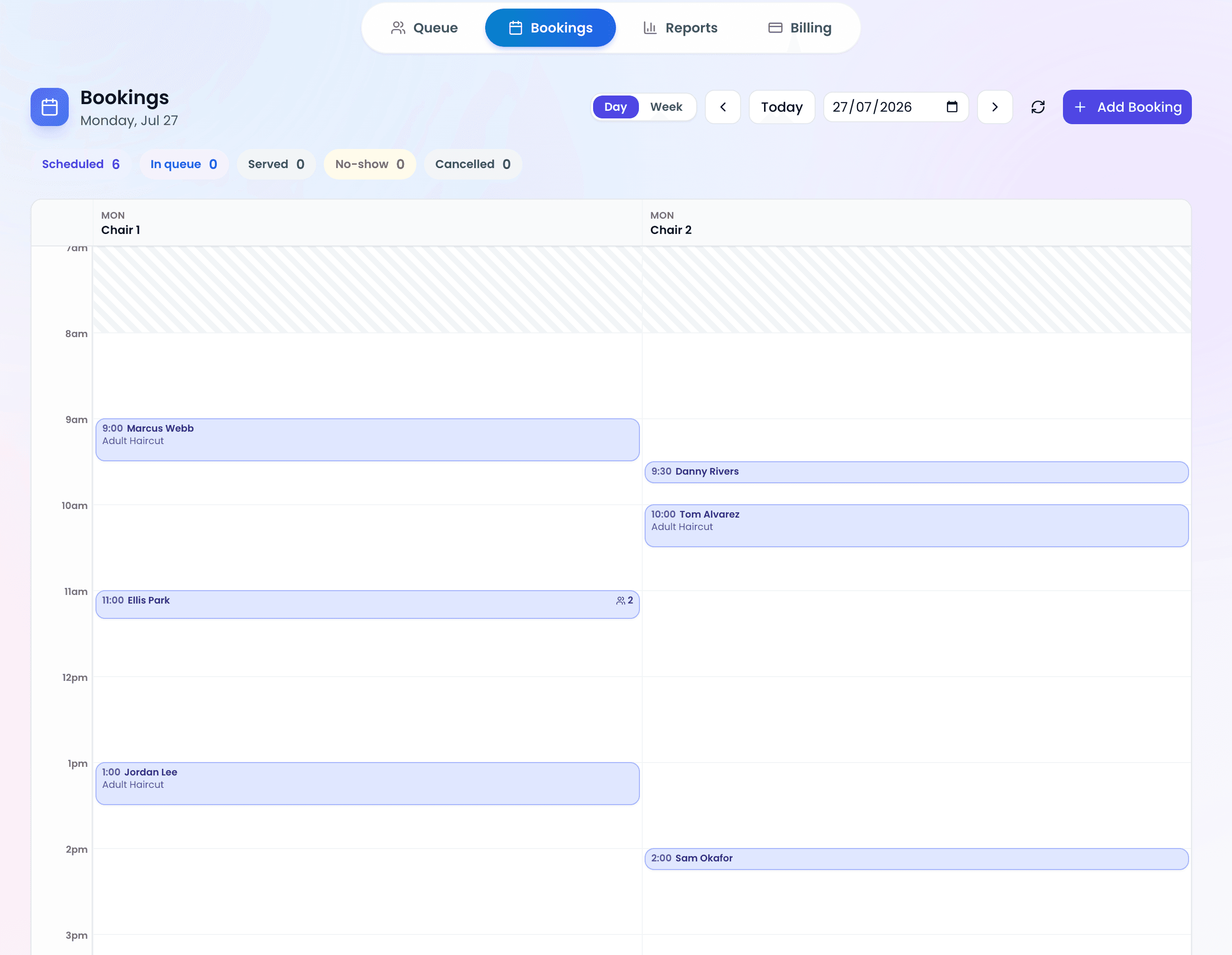
We run the ScanQueue platform and see every single queue entry that flows through it — name, timestamp, service, outcome. So we pulled the raw numbers: 4,436 real customer queue entries across 159 active businesses in 46 countries, and looked at what people actually do when they wait.
The data killed three widely-held myths about customer waiting, and confirmed a fourth that most queue software still ignores. Here's what we found.
The Headline Numbers
4,436 total queue entries analysed
3,226 served (72.7%)
888 cancelled (20.0%)
59 no-show (1.3%)
29.6 min median wait before being served
86.4 min average wait before being served
213.6 min P95 wait — the top 5% of the longest waits
The gap between the median (30 minutes) and the average (86 minutes) is the first interesting signal. When industry reports quote the "average wait," they hide this. Most customers wait far less; a minority wait much more. More on that in a minute.
Myth #1: Customers Leave After About 9 Minutes
A widely cited number comes from a survey of 2,000 UK shoppers for Box Technologies and Intel: about nine minutes is the average time people are prepared to queue in a store before leaving empty-handed. That describes customers standing in a physical line, unable to do anything else.
Our data says otherwise. With a digital queue showing live position and estimated wait, the median customer waited 29.6 minutes before being served. The 95th percentile waited 3.5 hours. Nobody "left" because they could wait from anywhere — a nearby bar, the car, the sofa at home.
The real variable isn't time. It's transparency. When customers see their position move and get a notification before their turn, they can wait far longer than they would standing blind in a line. Any queue system worth its name should be measured on how well it communicates during the wait, not how short the wait itself is.
Myth #2: Cancellation Rates Are Always Bad News
Twenty percent of our queue entries ended in cancellation. That sounds alarming. It isn't.
Here's the industry cancel-rate breakdown from our data:
- Restaurants: 31.3% cancelled (712 entries analysed)
- Salons: 25.3% cancelled (146 entries)
- Event vendors: 23.8% cancelled (803 entries)
- Retail: 19.6% cancelled (322 entries)
- Entertainment: 18.3% cancelled (767 entries)
- Barbershops: 17.2% cancelled (911 entries)
- Healthcare: 8.2% cancelled (73 entries)
Restaurants top the chart — and that's actually healthy. Without a digital queue, guests who give up just leave. With a digital queue, those same guests tap "cancel" from across the street because they found a shorter wait. Same outcome for the guest, totally different for the business: the restaurant now knows the guest cancelled, has a real-time queue count, and can adjust.
Measuring cancellation rate as a bad thing is backwards. A 0% cancel rate means one of two things: your queue is short enough that nobody needs to leave (great), or you don't have a digital queue and people are walking out silently (terrible). High cancel rates are what honest customer feedback looks like.
Myth #3: No-Shows Are a Big Problem
Only 1.3% of our queue entries ended as no-shows — where the customer was called, didn't respond, and gave up their spot. That's remarkably low compared to appointment industries, where no-show rates of 15-30% are common.
The reason is structural. In a walk-in queue, the customer chose their own moment to join. They're already warm. When their turn comes, they show up. The only industry in our data with a meaningful no-show rate was healthcare at 3.2% — and even that is an order of magnitude below typical appointment-based no-show figures.
For walk-in businesses, don't buy a queue system on the promise of "reducing no-shows." The no-show problem is small. Buy a queue system on the promise of reducing walkaways — people who never joined because the queue looked too long.
The Thing Nobody Talks About: Notification Channel Matters
We ran 7,629 notifications over 90 days across the platform. Here's what actually reached customers:
- WhatsApp: 84.9% delivered or read (4,635 messages)
- SMS: 81.3% delivered (2,994 messages)
The delivery gap is small. Cost depends on where your customers are: SMS is billed per message at rates that vary widely by country and carrier, and Meta also bills business-initiated WhatsApp template messages per message, by category and country.
Most queue systems still default to SMS-only. That made sense in 2015 when WhatsApp Business didn't exist. It doesn't make sense now. ScanQueue sends WhatsApp first, with SMS fallback only when the customer's number isn't WhatsApp-capable. We think it should be the default everywhere.
Industry Wait Times, Side by Side
This is where the median/average gap gets useful. Average wait time by industry, from our data:
- Salons: 393.6 min average — long hair/beauty services skew heavily
- Healthcare: 140.8 min — clinics running appointment overflow
- Event vendors: 115.4 min — brand activations, limited service capacity
- Barbershops: 102.2 min — the classic walk-in pattern
- Retail: 101.7 min — service counters during peak
- Restaurants: 51.8 min — dinner rush
- Entertainment: 24.6 min — fast, high throughput
If your industry is on this list, these are realistic numbers to benchmark your own operation against. If your average wait is significantly higher, the problem usually isn't your staffing — it's that you're measuring wait from the wrong starting point, or you have silent walk-outs that aren't showing up in your data at all.
What to Do With This
Three practical takeaways we'd hand any business owner:
- Measure median, not average. The average is pulled up by the worst days and the longest services. The median tells you what a typical customer actually experiences.
- WhatsApp-first for notifications. 85% reach in our data. SMS is a fallback, not a default.
- High cancel rates are honest feedback. If no-one ever cancels, customers are either not joining in the first place or walking out silently. Give them a proper "I'm not waiting anymore" button and use the signal to staff smarter.
Run Your Own Queue — Free
No credit card. No time limit. Median 30-minute wait, WhatsApp-first notifications, dashboard ready in 5 minutes.
Create Free Account →Data source: ScanQueue platform, 4,436 queue entries across 159 active businesses in 46 countries. Data anonymised and aggregated at business level. Snapshot taken 15 April 2026.
Stop losing walk-ins to wait times
Set up ScanQueue in 5 minutes. Customers scan a QR code, get SMS alerts when it's their turn, and wait anywhere.
- Free plan — no credit card
- No app download for customers
- QR code, SMS, and WhatsApp notifications
Fernando Mendes
Founder, ScanQueue
Helping businesses reduce wait times and improve customer experience with smart queue management solutions.