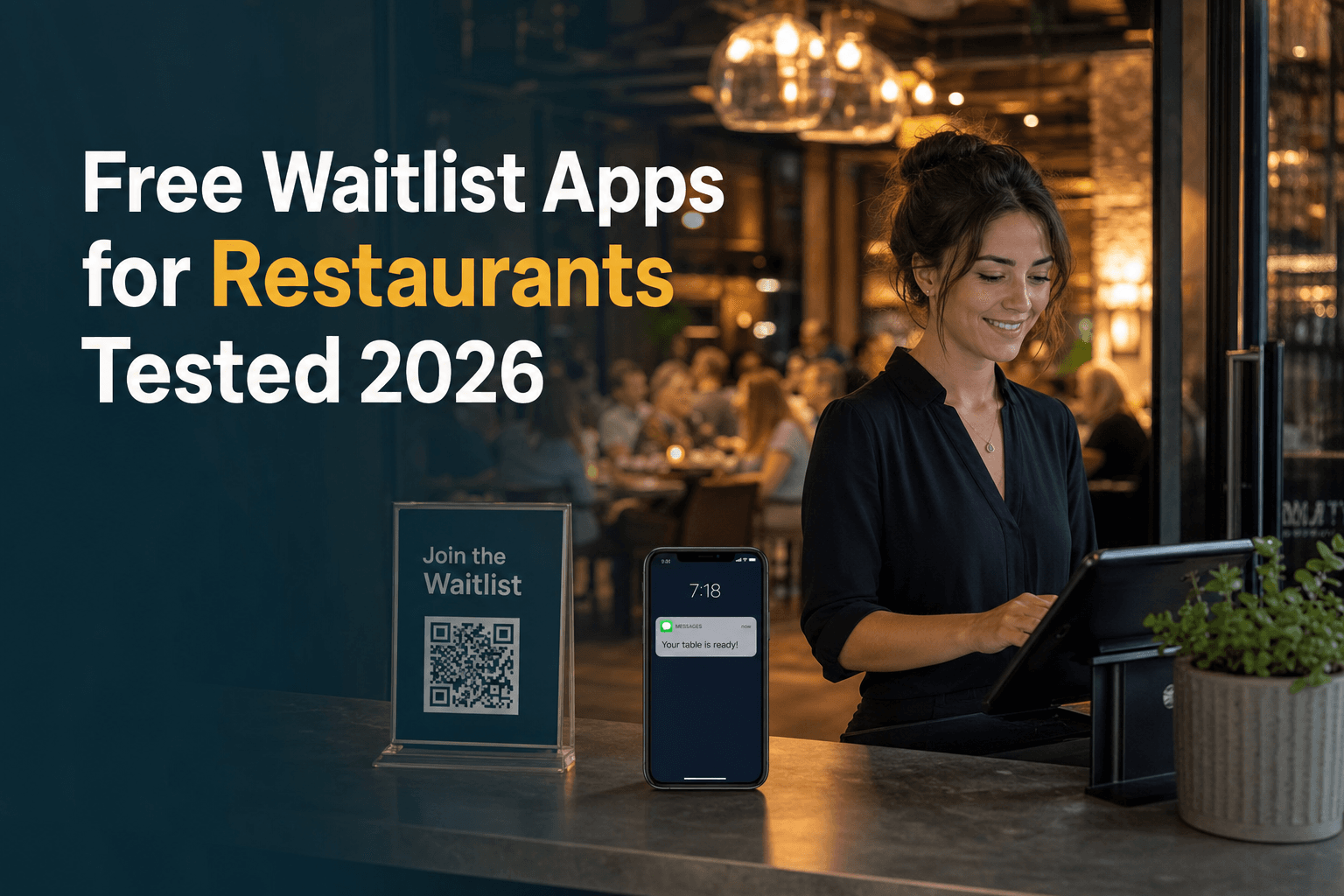
No-shows cost the hospitality industry $37.7 billion annually. That's not a typo — that's the figure Box Technologies and Intel arrived at when measuring lost sales from queue abandonment, empty tables, and missed appointments across the industry. The National Restaurant Association's 2025 data puts the average restaurant no-show rate between 15% and 20%, with fine dining venues seeing rates as high as 30%. If you're running a hospitality business, no-shows aren't just an annoyance — they're one of your biggest controllable costs. The good news: most no-shows are preventable with the right systems.
The True Cost of No-Shows
The sticker-shock number — $37.7 billion — becomes personal fast when you break it down per restaurant. Consider a 50-seat casual restaurant with a 15% no-show rate during peak hours. That's roughly 7–8 empty seats per service that could have been filled. At an average ticket of $35, that's $245–$280 in lost revenue per service. Over a month of dinner services alone, the losses reach $1,500–$3,000 or more.
But lost revenue is only the beginning. Each no-show triggers a cascade of hidden costs:
- Wasted food prep — Ingredients portioned for anticipated covers that never arrive go to waste or get repurposed at lower margins.
- Overstaffing — You rostered for full capacity. Now you're paying staff to stand around during what should have been a rush.
- Opportunity cost — The worst part. You turned away walk-in customers because the queue looked full. Those customers went to your competitor. The no-show never came. You lost both.
- Staff morale — Empty seats during "busy" periods frustrate teams who prepared for volume that didn't materialise.
Forrester's 2025 consumer research underlines the stakes from the customer side too: 73% of consumers say that valuing their time is the most important thing a business can do. When customers feel their time is respected — through accurate wait times, proactive updates, and easy queue management — they're far less likely to abandon.
Why Customers No-Show
Before solving the problem, it helps to understand why customers abandon queues and miss their turns. The root causes fall into five categories:
- They forgot they joined the queue. They walked around the block, got distracted, and never came back. No reminder, no return.
- They found an alternative while waiting. A competitor down the street had no line. They switched. Your queue counted them as a no-show.
- Uncertain wait time made them leave. "You'll be about 20 minutes" turns into 40 minutes. Without updates, anxiety builds and patience breaks.
- No consequence for abandoning. There's no accountability, no follow-up, no feedback loop. Walking away is frictionless.
- Life happened. They got a phone call, their kid had a meltdown, plans changed. This category is genuinely unavoidable.
Pro tip: The first four causes are all solvable with technology. Only the last one — life happening — is truly out of your control. That means up to 80% of your no-shows are preventable.
1. SMS Queue Notifications
Of all the solutions in this guide, SMS notifications deliver the highest impact per dollar spent. Businesses using SMS queue notifications report up to 40% fewer no-shows compared to relying on verbal call-outs or display boards alone. The reason is simple: SMS meets customers where they already are — on their phone.
The most effective SMS strategy uses three touchpoints throughout the queue journey:
- Welcome confirmation — Sent immediately when the customer joins. Confirms their position, gives an estimated wait, and provides a link to track their status. This alone cuts "forgot I joined" no-shows dramatically.
- Position update — Sent at the midpoint (e.g., "You're now 3rd in line"). Re-engages customers who may have drifted mentally or physically.
- Ready notification — The final "Your table is ready" message. Creates urgency and a clear call to action.
Each SMS is a gentle re-engagement that pulls the customer back into your orbit. For a deeper dive into setting up SMS for queue management, see our complete guide to SMS queue notifications. ScanQueue includes SMS notifications on all paid plans with automatic send at each touchpoint.
2. Real-Time Wait Time Transparency
Uncertainty is the number one driver of queue abandonment — more than actual wait length. Waitwhile's 2025 consumer research found that 59% of customers are willing to wait longer when they're given accurate, real-time wait estimates. The psychology is clear: knowing you have 15 minutes left is manageable. Not knowing if it's 5 minutes or 45 is intolerable.
Effective wait-time transparency includes showing customers their current position in the queue (e.g., "4th in line"), an estimated wait time that updates dynamically as the queue moves, and the number of people being served ahead of them. When customers can see the queue moving — even if slowly — they're far more likely to stay. It transforms waiting from an unknown ordeal into a predictable, manageable experience.
The key is accuracy. Overpromising ("5 more minutes" when it's actually 20) is worse than no estimate at all. Modern queue systems calculate estimates based on historical service times, giving customers numbers they can actually trust.
3. Virtual Queuing
Virtual queuing — where customers join a digital queue and are free to wait anywhere — is one of the most powerful no-show prevention tools available. Research published in the International Journal of Hospitality Management found that virtual queuing reduces walkaways by 23% compared to traditional physical lines. The reason is intuitive: when you're not physically trapped in a line, waiting doesn't feel like waiting.
With a virtual queue system, customers scan a QR code, join the queue, and go about their day. They can browse nearby shops, wait in their car, or finish errands — all while tracking their position in real time on their phone. When it's their turn, an SMS brings them back. The experience transforms a negative (standing in line) into a neutral or even positive one (running errands while someone holds your spot).
This approach is especially effective for venues with variable wait times — restaurants during weekend brunch, walk-in clinics, or barbershops on Saturday mornings. Customers who would have walked away after 10 minutes of physical standing will happily wait 25 minutes virtually. Learn more about the benefits of virtual queuing and how it compares to traditional approaches.
4. Confirmation & Reminder Sequences
A single notification isn't enough. The most effective no-show prevention uses a three-touch sequence that mirrors the customer's psychological journey through the wait:
- Touch 1: Join confirmation with position. "You're #7 in the queue. Estimated wait: ~20 min. Track your position here: [link]." This anchors the commitment. The customer has now taken an action and received acknowledgement.
- Touch 2: Midpoint update. "You're now 3rd in line — about 8 minutes away." This is the crucial re-engagement moment. Customers who wandered off are pulled back. Those who were considering leaving are reminded they're close.
- Touch 3: Ready notification. "Your table is ready! Please head to the host stand." Clear, actionable, urgent. No ambiguity about what to do next.
Each touch serves a distinct psychological purpose. The confirmation creates commitment. The midpoint update sustains engagement during the highest-risk abandonment window. The ready notification converts the wait into action. Businesses that implement all three touchpoints see dramatically lower no-show rates than those using only a final "you're ready" message — because by then, many customers have already left.
5. Easy Self-Cancellation
This one sounds counterintuitive: make it easier for customers to cancel. Won't that increase cancellations? Actually, no. When customers can easily cancel with a single tap from their queue status page, something interesting happens — they cancel instead of silently no-showing. And a known cancellation is infinitely more valuable than a mystery no-show.
Here's why easy cancellation reduces net losses: when a customer cancels, the queue system immediately moves everyone behind them up one position and can notify the next person in line. The slot gets recovered in seconds. Compare that to a no-show, where you don't know the customer isn't coming until their name has been called 2–3 times, staff have waited, and 5–10 minutes of prime seating time have been wasted. Multiply that across 8–10 no-shows per service, and you've lost nearly an hour of table utilisation.
ScanQueue provides a cancel button directly on the customer's queue status page. No phone calls, no awkward conversations — just a tap. The result is a cleaner, more accurate queue that moves faster for everyone.
6. Waitlist Analytics & Pattern Detection
No-shows don't happen randomly. They follow patterns — and once you can see those patterns, you can act on them. Modern queue management software tracks every queue entry, cancellation, no-show, and completion, giving you data to answer critical questions:
- Time-of-day patterns: Are no-shows higher during the 7–8 PM window? Maybe customers join optimistically during peak hours but lose patience.
- Day-of-week trends: Friday nights might have 25% no-show rates while Tuesday lunches have 5%. Staff and prep accordingly.
- Party size correlations: Large groups (6+) often have higher no-show rates because coordination is harder. You might overbook by one large-party slot on Saturday nights.
- Wait-time thresholds: At what point do your customers give up? If no-shows spike after 25 minutes, that's your maximum acceptable wait target.
With this data, you can implement smart overbooking — accepting slightly more queue entries than capacity during high-no-show periods, knowing that a predictable percentage won't show up. Airlines have done this for decades. Restaurants can apply the same logic with far less complexity.
7. Shorter Queue-to-Service Windows
The gap between your "you're ready" notification and the customer's expected arrival is one of the most overlooked factors in no-show rates. A 15-minute window — "come in sometime in the next 15 minutes" — gives customers too much slack. They think "I'll finish this errand first," and then they don't come at all. A 5-minute window creates appropriate urgency without being unreasonable.
The key is matching your notification timing to your venue's actual walk-in time. If most of your queued customers are within a 2-minute walk (sitting in their car, browsing next door), notify them 3–5 minutes before you need them seated. If your customers tend to wait further away, adjust to 7–10 minutes but no more. The longer the window, the more opportunities for distraction, changed plans, and ultimately no-shows.
Some queue systems let you configure the notification lead time per service type. A quick barber cut might warrant a 3-minute heads up, while a fine dining table might need 10. Calibrate based on your actual data, not your gut feeling — the analytics from solution #6 will tell you exactly where the sweet spot is.
8. Deposits & Pre-Authorization
For high-value reservations — fine dining experiences, large party bookings, special event seating — deposits and credit card pre-authorisation can reduce no-shows by up to 60%. The financial commitment creates accountability that no notification system can replicate. When $50 per person is at stake, people remember their reservation.
However, this solution comes with a significant caveat: it's not appropriate for casual walk-in queues. Asking someone to enter their credit card details to join a queue at a casual brunch spot will tank your conversion rate. The friction-to-value ratio is all wrong. Customers will walk straight to the competitor who doesn't require a financial commitment to wait for a table.
Use deposits strategically and only where the ticket value justifies the friction: tasting menus, private dining rooms, groups of 8+, or holiday bookings. For everything else, the other seven solutions in this guide will serve you better without alienating potential customers.
How ScanQueue Reduces No-Shows
ScanQueue was built to address the no-show problem from multiple angles simultaneously. Here's how the platform maps to the solutions in this guide:
- SMS notifications (Solutions 1 & 4) — Automatic SMS at join, position updates, and ready notifications. No manual intervention needed. Included on all paid plans.
- Real-time position tracking (Solution 2) — Customers see their live position and estimated wait on their phone, updated in real time via WebSocket.
- Virtual queuing via QR code (Solution 3) — Customers scan a QR code at your venue, join the queue, and leave. No app download, no account creation, no friction.
- Self-cancel button (Solution 5) — One tap to cancel from the queue status page. Instantly frees the slot for the next customer.
- Analytics dashboard (Solution 6) — Track queue volume, wait times, completion rates, and no-show patterns across time periods. Make data-driven decisions about staffing and overbooking.
The result: businesses using ScanQueue consistently see their no-show rates drop significantly — often by 30–40% within the first month. The combination of proactive SMS, transparent wait times, and friction-free virtual queuing addresses the root causes, not just the symptoms. See how it compares in our waitlist management software overview.
Frequently Asked Questions
What is the average no-show rate in restaurants?
15–20% according to the National Restaurant Association. Fine dining venues can see rates as high as 30%. Even a 5% reduction in no-shows can save a restaurant thousands of dollars per month in recovered revenue.
How do SMS notifications reduce no-shows?
SMS reminders sent at key moments — when a customer joins, when they're approaching their turn, and when they're ready to be served — keep customers engaged throughout the wait. Businesses using SMS queue notifications report up to 40% fewer no-shows.
What is virtual queuing and how does it reduce walkouts?
Virtual queuing lets customers join a digital queue via QR code or link and wait anywhere they like — in their car, at a nearby shop, or at home. Research from the International Journal of Hospitality Management shows 23% fewer walkaways because customers aren't physically stuck in line.
How much do no-shows cost the hospitality industry?
Box Technologies estimates $37.7 billion annually in lost sales from queue abandonment and no-shows. Individual restaurants typically lose between $1,000 and $5,000 per month depending on volume and average ticket size.
Should restaurants charge no-show fees?
Only for high-value reservations such as fine dining or large party bookings. For casual dining and walk-in queues, SMS notifications and easy self-cancellation are far more effective and less alienating to customers than punitive fees.
Reduce No-Shows Starting Today
ScanQueue gives you SMS notifications, virtual queuing, real-time tracking, and analytics — everything you need to turn no-shows into served customers. Set up in under 5 minutes.
Start Free Trial →Stop losing walk-ins to wait times
Set up ScanQueue in 5 minutes. Customers scan a QR code, get SMS alerts when it's their turn, and wait anywhere.
- Free plan — no credit card
- No app download for customers
- QR code, SMS, WhatsApp, and voice notifications
ScanQueue Team
Queue Management Experts
Helping businesses reduce wait times and improve customer experience with smart queue management solutions.