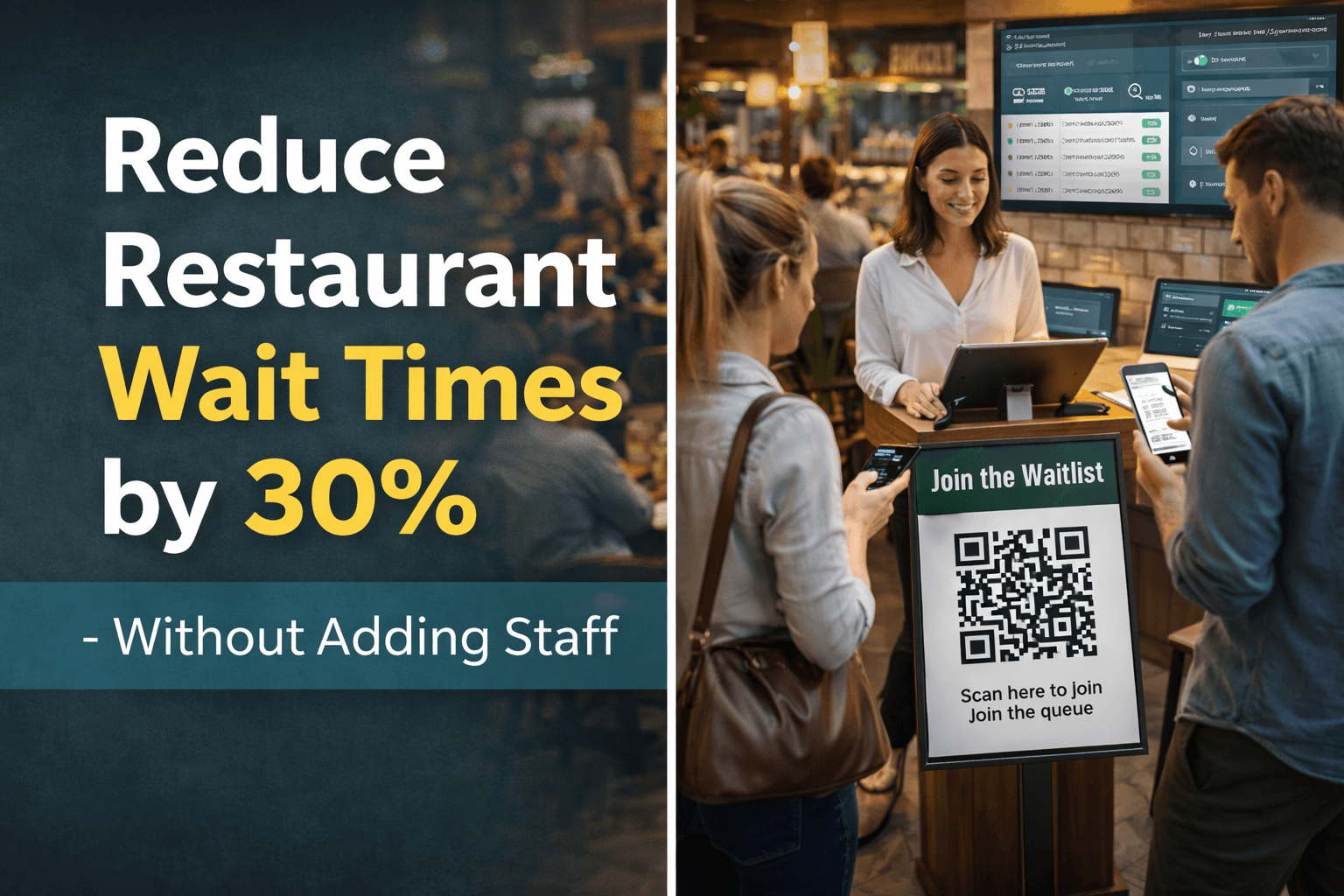
A wait with no information feels longer than the same wait with real-time updates. Perceived wait time, not just actual wait time, drives customer satisfaction. Understanding this psychology lets you dramatically improve your queue experience without serving a single customer faster.
This isn't speculation. David Maister's seminal 1985 paper "The Psychology of Waiting Lines" laid the foundation, and decades of subsequent research have validated and expanded his findings.
Here's what the research tells us — and how you can apply it today.
Maister's Eight Principles of Waiting
David Maister identified eight psychological principles that govern how people experience waiting. Each one is a lever you can pull to improve your customers' perception of your queue.
1. Unoccupied Time Feels Longer Than Occupied Time
When people have nothing to do, every second drags. Standing in a bare hallway staring at a door feels endless. Browsing your phone, reading a menu, or shopping in a nearby store makes time fly.
How to apply it: Use virtual queuing to free customers from physical waiting. When they can leave the area and do something else — get coffee, browse shops, sit in their car — the wait doesn't feel like a wait. This is the single most powerful application of waiting psychology.
2. Uncertain Waits Feel Longer Than Known Waits
Not knowing how long the wait will be is one of the biggest drivers of queue frustration. "It shouldn't be much longer" is among the most rage-inducing phrases in customer service because it communicates nothing useful.
How to apply it: Display real-time queue positions and estimated wait times. Digital queue systems do this automatically on the customer's phone. Even an approximate estimate ("about 15 minutes") dramatically outperforms uncertainty.
Pro Tip — Overestimate Slightly: If your system estimates 12 minutes, show 15. When the customer is called early, they feel pleasantly surprised. If it takes the full 15, they're still within expectations. Walt Disney World is widely reported to post ride wait times that run longer than the actual wait.
3. Unexplained Waits Feel Longer Than Explained Waits
When customers don't know why they're waiting, they assume the worst — incompetence, understaffing, or being forgotten. A brief explanation makes the same wait feel reasonable.
How to apply it: If there's a delay beyond normal, communicate it. "We're running about 10 minutes behind due to a large party — thanks for your patience" is far better than silence. Queue systems can send status updates via SMS to keep customers informed.
4. Unfair Waits Feel Longer Than Fair Waits
Nothing generates anger faster than seeing someone who arrived after you get served first — especially without explanation. Perceived unfairness makes the entire wait feel longer and poisons the experience.
How to apply it: Use a first-in, first-out system that customers can verify. Digital queues show position numbers, making the order transparent. If you need to serve out of order (e.g., different service types), use separate queues so it's visibly fair within each category.
5. Pre-Process Waits Feel Longer Than In-Process Waits
Waiting before service begins feels longer than waiting during service. A 10-minute wait before being seated feels worse than a 10-minute wait between ordering and food arriving. Once service has started, the customer feels like progress is being made.
How to apply it: Start the service process as early as possible. Hand menus to waiting restaurant guests. Collect intake information from clinic patients while they wait. The customer's perception shifts from "waiting to be served" to "being served" — even though they're still waiting.
6. Anxiety Makes Waits Feel Longer
Will they call my name? Did they forget about me? Am I in the right place? Anxiety magnifies every moment. Customers who are worried about their place in the queue experience the wait as significantly longer than relaxed customers.
How to apply it: Eliminate ambiguity. A join confirmation SMS, a visible queue position, and regular updates remove the anxiety. When customers know they haven't been forgotten, they relax — and relaxed waiting feels shorter.
7. Solo Waits Feel Longer Than Group Waits
People waiting alone experience time as passing more slowly than those waiting in groups. Social interaction is a natural form of occupied time (see principle 1).
How to apply it: This is hard to engineer directly. But virtual queuing helps here too — a solo customer waiting at a coffee shop down the street is in a social environment, even if they're alone. The physical waiting room, by contrast, is often a silent, uncomfortable space.
8. The More Valuable the Service, the Longer People Will Wait
Customers will wait 45 minutes for a top-rated restaurant but walk away from a 10-minute queue at a fast food counter. The perceived value of the service sets the tolerance threshold.
How to apply it: While you can't change this principle directly, you can reinforce your value proposition during the wait. Show reviews, highlight what makes your business special, and communicate quality signals. A well-managed queue is itself a quality signal — it tells customers that you take their experience seriously.
Putting It All Together: A Practical Framework
You don't need to implement all eight principles at once. Focus on the highest-impact changes first:
- Show wait times (addresses uncertainty)
- Enable remote waiting (addresses occupied vs. unoccupied time)
- Send SMS updates (addresses anxiety and uncertainty)
- Maintain visible fairness (addresses fairness perception)
- Start service early (addresses pre-process vs. in-process waiting)
A digital queue management system handles the first four automatically. The fifth requires operational changes on your end, but the others can be implemented in an afternoon.
Frequently Asked Questions
Does playing music really make waits feel shorter?
Marginally. Music helps with the "occupied time" principle but its effect is small compared to providing wait time information or enabling remote waiting. It's a nice-to-have, not a solution to long queues.
What's more important: reducing actual wait time or perceived wait time?
Both matter. Perception is often the cheaper place to start, because an explained, certain wait feels shorter than an unexplained, uncertain one. Start with perception, then optimize actual times with operational strategies.
Can these principles apply to phone queues and online queues?
Absolutely. The psychology is the same whether someone is waiting in a physical line, on hold, or in a virtual queue. The key principles — uncertainty, fairness, occupied time — apply to every waiting context.
How do I measure perceived wait time?
Post-service surveys are the simplest approach. Ask "How long do you feel you waited?" and compare to the actual time recorded by your queue system. The gap between perceived and actual is your opportunity for improvement.
Make Every Wait Feel Shorter
ScanQueue applies waiting psychology automatically — real-time updates, SMS notifications, and remote waiting built in.
Start Your Free Trial →Stop losing walk-ins to wait times
Set up ScanQueue in 5 minutes. Customers scan a QR code, get SMS alerts when it's their turn, and wait anywhere.
- Free plan — no credit card
- No app download for customers
- QR code, SMS, and WhatsApp notifications
ScanQueue Team
Queue Management Experts
Helping businesses reduce wait times and improve customer experience with smart queue management solutions.