Paper queue management has hidden costs, from lost customers to wasted staff time. Digital queue systems eliminate most of these costs while improving customer satisfaction. Here's the full breakdown.
If you're still using a clipboard, a whiteboard, or a handwritten sign-up sheet to manage your queue, you're not saving money. You're spending it in ways you can't easily see: customer walkaways, staff overtime on manual tasks, and missed insights that could grow your business.
The Hidden Costs of Paper Queue Management
1. Staff Time: The Biggest Hidden Expense
With paper, someone on your team is always managing the list. They're writing names, calling out to the waiting area, crossing off no-shows, and answering "how much longer?" every few minutes. This is time they're not spending on actual service delivery.
If queue tasks take 15-20 hours per week of staff time at a busy restaurant or barbershop, at $25/hour that's $375-$500 per week, or $19,500-$26,000 per year. A digital system automates most of this — customers join themselves, get automatic updates, and notify staff only when action is needed.
2. Customer Walkaways: Revenue You Never See
When customers can't see how long the wait is — or worse, when the wait looks longer than it actually is — they leave. With paper, there's no transparency. Customers see a crowded entrance and a scribbled list and assume the worst.
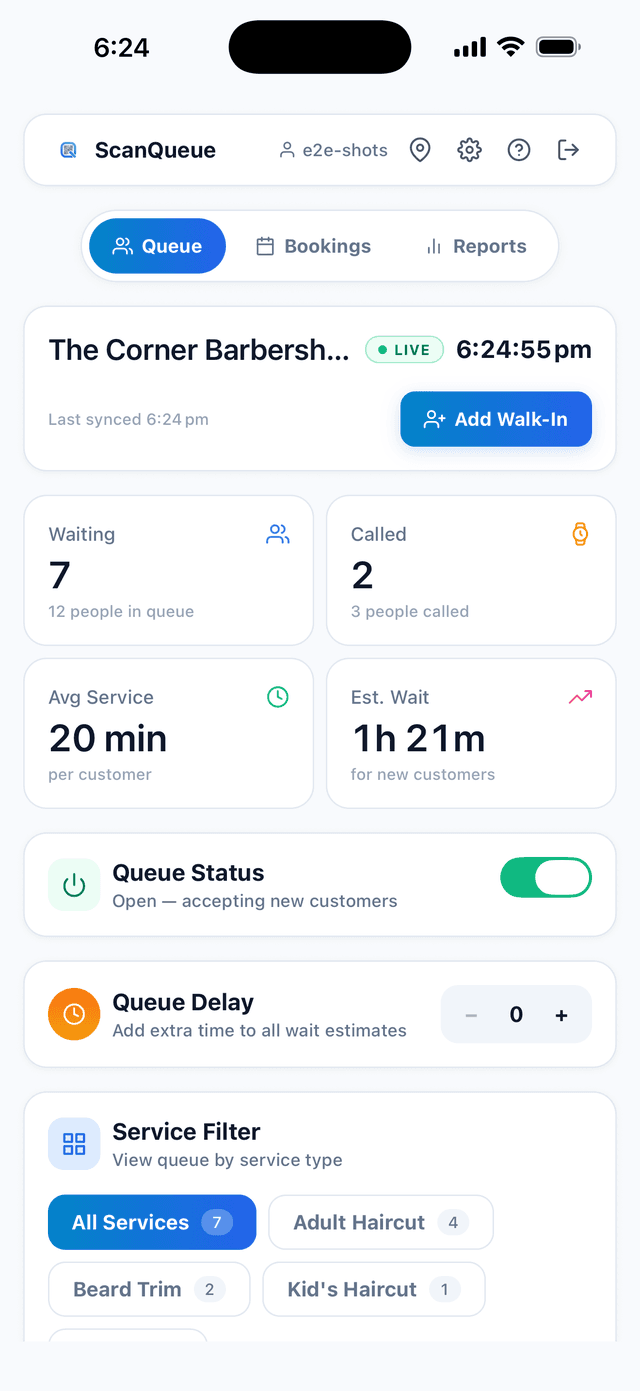
Digital queues display real-time position and estimated wait times, keeping customers informed and reducing the perceived wait.
Pro Tip — Calculate Your Walkaway Cost: Count the number of groups that leave during one peak hour. Multiply by your average transaction value. Now multiply by the number of peak hours per week. That's your weekly loss from walkaways alone.
3. Error Rates: Misspelled Names and Missed Turns
Handwritten lists are error-prone. Names get misspelled, entries get skipped, and the person shouting "Johnson, party of four!" into a crowded room might be calling the wrong Johnson. These errors create friction, embarrassment, and complaints.
Digital systems eliminate this entirely. Customers type their own names, receive personal SMS notifications, and staff see a clean, ordered list. No shouting, no guessing, no mistakes.
4. Zero Analytics: Flying Blind
Paper tells you nothing after the fact. How long did customers wait on average last Tuesday? What's your busiest hour? How many people did you serve? With paper, you're guessing. With digital, you have data.
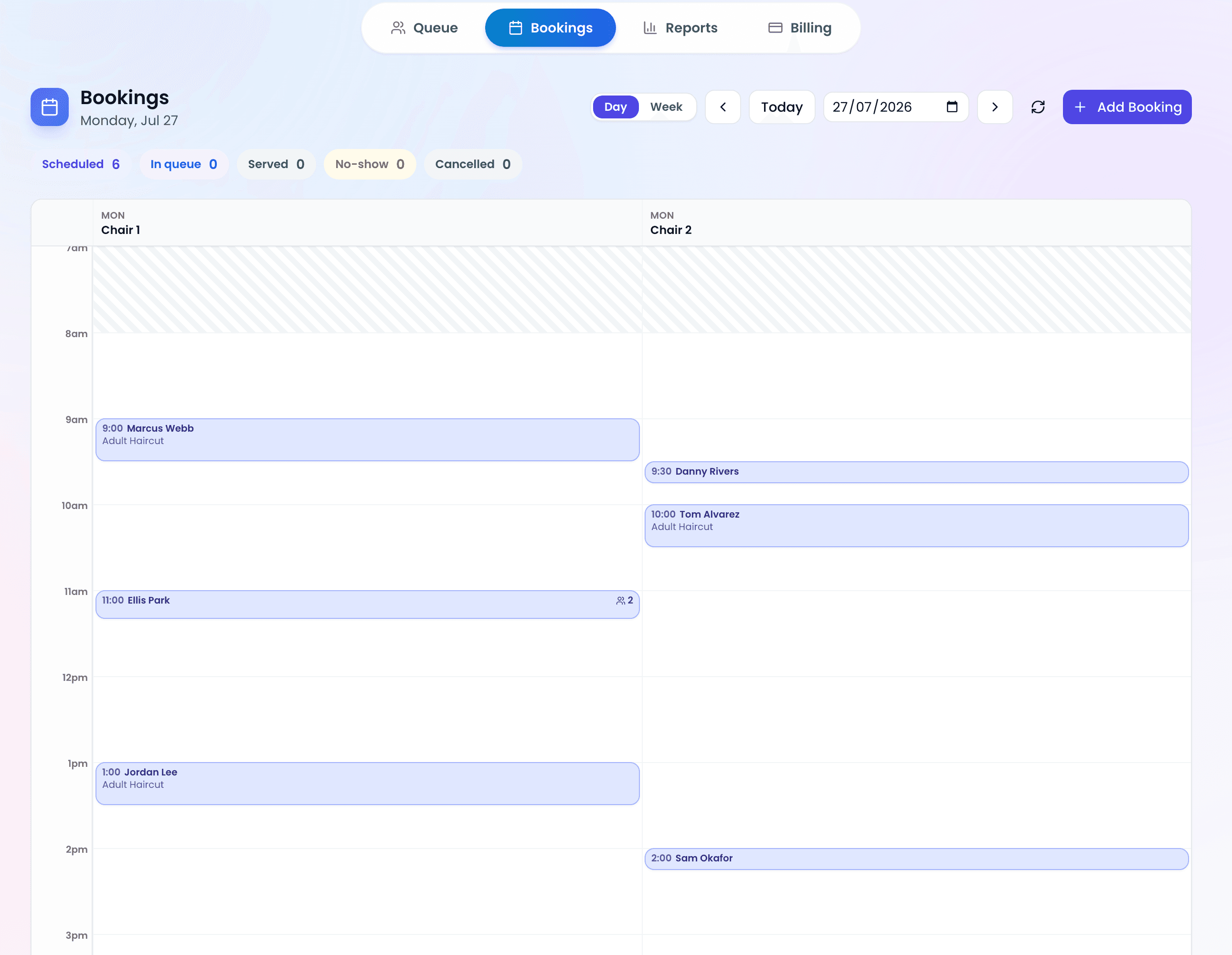
Analytics from a digital queue system help you make smarter decisions about staffing, capacity, and service speed.
5. Scalability: Paper Breaks at Volume
A clipboard works when you have 5 people waiting. It falls apart at 20. Paper queues have no concept of "services," can't handle multiple counters, and offer no way to prioritize. When things get busy, the system degrades.
Digital queues scale effortlessly. Whether you have 5 or 50 people waiting, the system handles assignment, notifications, and wait time estimates automatically.
Cost Comparison: Paper vs Digital
Here's an illustrative annual cost breakdown, using example figures, for a mid-size service business (like a busy restaurant or clinic):
| Cost Category | Paper System | Digital System |
|---|---|---|
| Software/Supplies | $200 (paper, pens) | $0–$2,988/yr |
| Staff time on queue tasks | $19,500–$26,000 | $3,000–$5,000 |
| Customer walkaways (lost revenue) | $15,000–$40,000 | $5,000–$15,000 |
| Error-related complaints | $1,000–$3,000 | Near zero |
| Analytics value | $0 (no data) | $2,000–$5,000 (savings) |
| Estimated Total Annual Cost | $35,700–$69,200 | $8,000–$22,988 |
In this example, even at the conservative end, going digital saves $27,000+ per year. The software cost is a fraction of the hidden costs you're already paying with paper.
What Digital Gets You That Paper Can't
- Automatic SMS notifications — customers don't need to hover near the door
- Real-time wait estimates — reduces anxiety and walkaways
- Self-service check-in — customers scan a QR code and join without staff help
- Historical analytics — peak hours, average wait times, no-show rates
- Multi-service queues — route customers to the right counter or station
- Remote waiting — customers wait from their car, a nearby cafe, or down the street
When Paper Still Makes Sense
To be fair, there are situations where paper works fine:
- Very low volume (fewer than 10 customers per day)
- Temporary or pop-up operations with no reliable internet
- Businesses where customers always wait on-site (e.g., a small deli counter)
For everyone else — especially businesses with regular peak-hour rushes — the switch to digital pays for itself within weeks.
Frequently Asked Questions
Is a digital queue system hard to set up?
No. Most modern systems like ScanQueue can be set up in under 5 minutes. There's no hardware to install — just create an account, print a QR code, and start accepting customers.
What if my staff aren't tech-savvy?
Modern queue dashboards are designed to be simpler than the paper process. If your staff can use a smartphone, they can manage a digital queue. Most teams are fully comfortable within one shift.
What happens if the internet goes down?
You can always fall back to manual entry. But internet outages at commercial locations are rare and typically brief. The same internet that runs your payment terminal runs your queue system.
Can I try a digital system without committing?
Yes. ScanQueue's Starter plan is free forever with no credit card required. You can run both systems in parallel during a transition period — here's a step-by-step migration guide.
Stop Losing Customers to Paper Queues
Switch to digital in 5 minutes. Free plan available — no credit card, no contracts.
Start Free Today →Stop losing walk-ins to wait times
Set up ScanQueue in 5 minutes. Customers scan a QR code, get SMS alerts when it's their turn, and wait anywhere.
- Free plan — no credit card
- No app download for customers
- QR code, SMS, and WhatsApp notifications
ScanQueue Team
Queue Management Experts
Helping businesses reduce wait times and improve customer experience with smart queue management solutions.