If you have ever typed "que" into a search bar and wondered whether you spelled it right, you are not alone. "Queue" is one of the most commonly misspelled words in English, largely because four of its five letters are silent.
The short answer: "queue" is the correct spelling for a line of people or items waiting their turn. "Que" is a misspelling in English, and the word is pronounced exactly like the letter Q.
Queue vs Que: Which Spelling Is Correct?
Only one of these is correct English:
- Queue (correct): a line of people, vehicles, or items waiting their turn.
- Que (incorrect in English): a frequent misspelling. It is a real word in Spanish and French, but not in standard English.
- Cue (different word): pronounced the same, but it means a signal or prompt, as in a stage cue. Do not confuse the two.
Definition: A queue (pronounced /kjuː/) is a line of people or items waiting their turn. As a verb, to queue means to form or join that line.
What Does Queue Mean?
"Queue" works as both a noun and a verb, and it carries a specific meaning in computing too:
- Noun: a line of people or vehicles waiting for something. "There was a long queue outside the bakery."
- Verb: to line up or wait in turn. "Shoppers queued for an hour before the doors opened."
- Computing: a data structure that processes items in the order they arrive, known as first in, first out (FIFO). Print jobs and task lists use queues.
How Do You Pronounce Queue?
Queue is pronounced /kjuː/, which sounds exactly like the letter Q and the word "cue." Only the first two letters do any work. The "ueue" at the end is completely silent, which is why the word trips up so many writers.
Queue, Queued, Queuing or Queueing: The Different Forms
Like most English verbs, "queue" changes form depending on tense. Here are the forms you will actually use:
- Queue: the base form, used as a noun or a verb.
- Queues: the plural noun, or the third-person verb.
- Queued: the past tense. "They queued for tickets."
- Queuing or queueing: the present participle. Both spellings are correct. "Queuing" is more common, while "queueing" keeps the second e.
Why Is Queue Spelled With Four Silent Letters?
The spelling comes straight from French, where "queue" means "tail." French borrowed it from the Latin "cauda," also meaning tail. English adopted the French spelling whole, silent letters and all, rather than simplifying it. So a queue is, quite literally, a tail of people waiting their turn.
That history is also why "queue" looks so different from how it sounds. English kept the original French letters but applied an English pronunciation, leaving four letters along for the ride.
From Standing in Line to Managing a Queue
Spelling aside, queues are something every walk-in business deals with daily. A queue that feels long and uncertain drives customers away, while a well-managed one keeps them calm and coming back. The psychology is well documented: an unclear wait feels roughly twice as long as the real one.

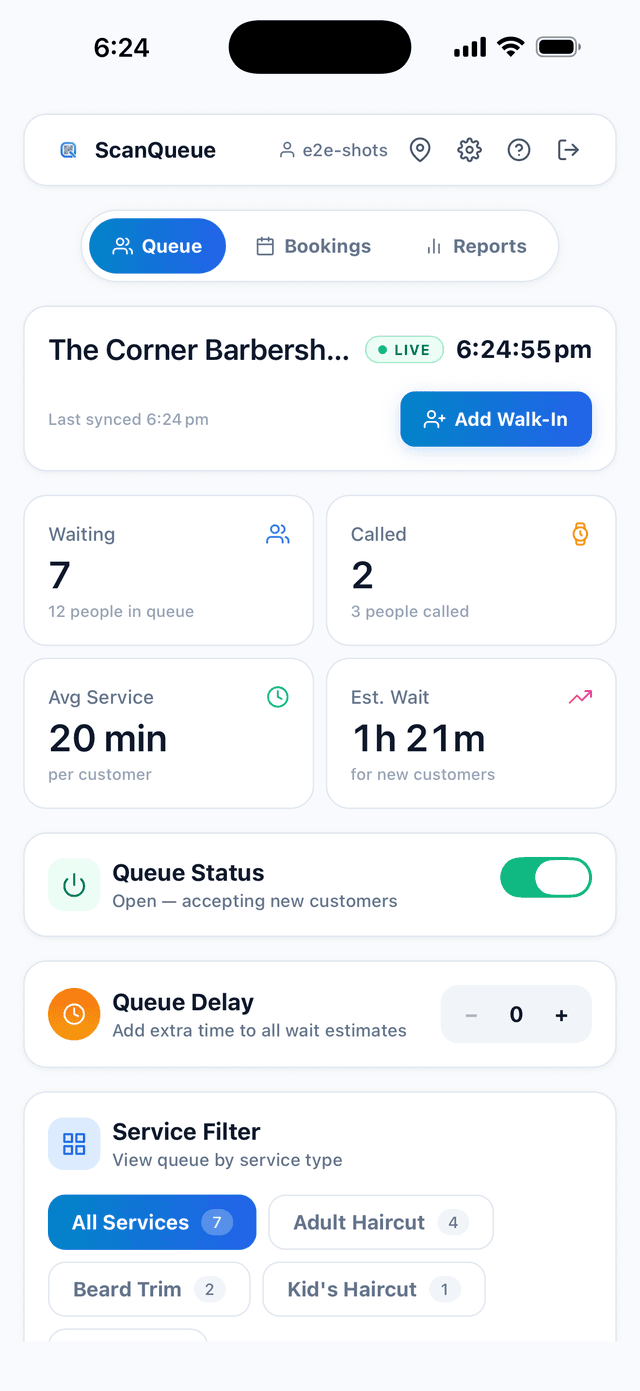
That is where a queue management system comes in. Instead of a physical line, customers join a virtual queue from their phone, see their live position, and get notified when it is their turn. To go deeper on why waits feel the way they do, read our guide to queue psychology, or see how ScanQueue works.
Stop losing walk-ins to wait times
Set up ScanQueue in 5 minutes. Customers scan a QR code, get SMS alerts when it's their turn, and wait anywhere.
- Free plan — no credit card
- No app download for customers
- QR code, SMS, WhatsApp, and voice notifications
ScanQueue Team
Queue Management Experts
Helping businesses reduce wait times and improve customer experience with smart queue management solutions.